Live progression
Guests can watch the artwork develop throughout the event.

Every guest.
Part of the bigger picture.
A live photo mosaic turns individual portraits into a shared work of art. As photos become tiles, your logo, campaign visual or celebration image is gradually revealed across a physical wall, digital display or both.
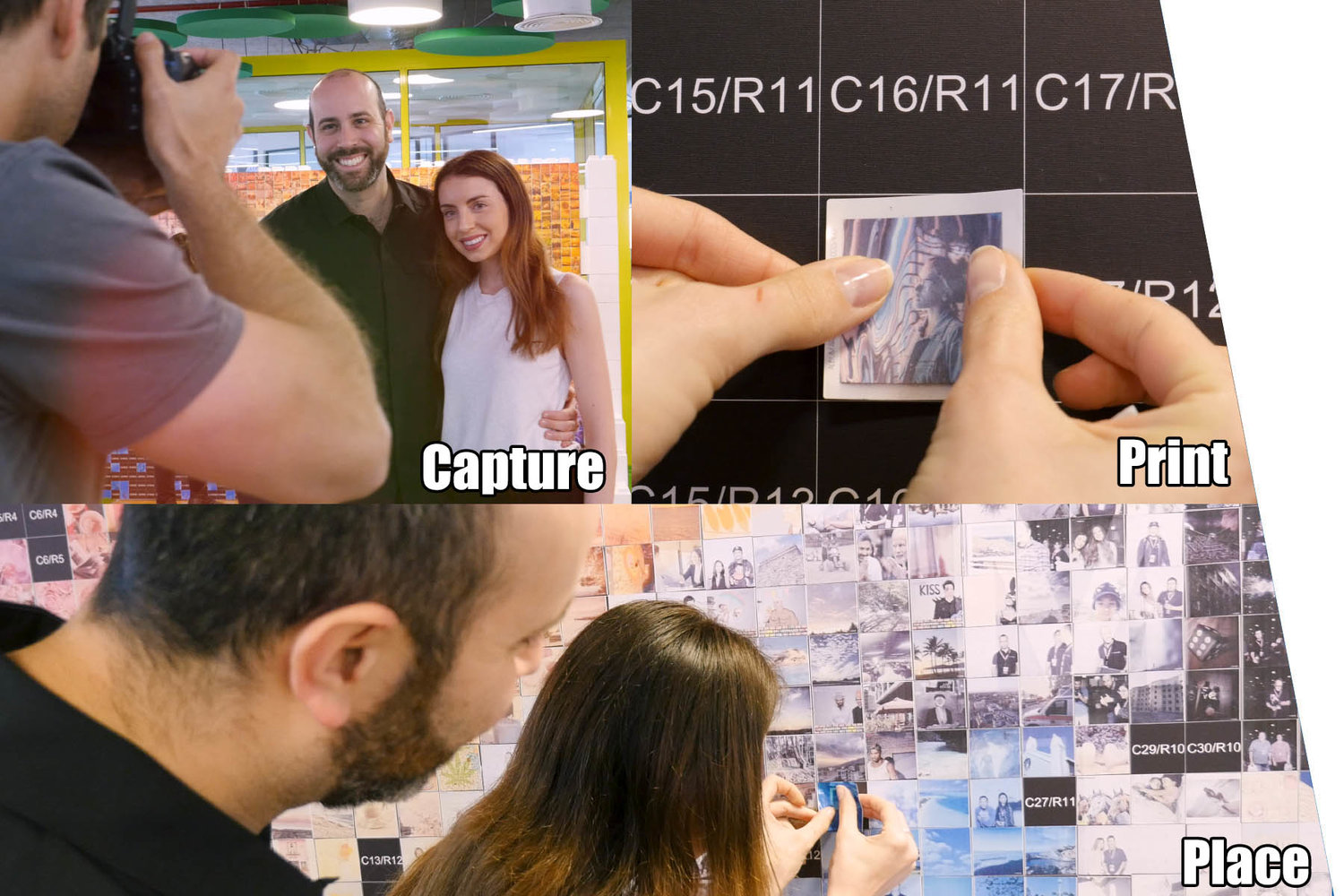
Each guest portrait becomes one tile in a growing visual installation. As more people participate, the larger artwork becomes clearer—giving the room a shared outcome and the client a powerful visual centerpiece.
Guests can watch the artwork develop throughout the event.
Photos may come from a staffed booth, roaming photographer or approved digital contribution workflow.
The completed artwork can reveal approved branding, campaign creative, a logo or an event image.
The activation can be planned as a printed installation, digital display or combined experience.
Guests contribute portraits through the selected booth, roaming or digital workflow.
Each image is assigned a position within the larger mosaic composition.
Tiles accumulate throughout the event as the master image becomes visible.
The finished mosaic becomes a collective record of the audience and event.
A mosaic gives individual participation a shared purpose. It also creates a visual reason to return, watch progress and photograph the final result.
Corporate celebrations, universities, fundraising events, conferences, brand milestones, community events and multi-day activations.
A planned capture workflow, custom master design, mosaic production, professional staffing and the agreed final physical or digital artwork.
Final footprint, power, connectivity, timing and deliverables are confirmed for each event plan.
A recognizable logo, bold campaign image or meaningful portrait becomes the larger composition. We review contrast, color and detail so the artwork reads from across the room while individual photos remain interesting up close.
A staffed booth creates a clear photo destination. Roaming capture can reach people throughout the venue. Other digital contribution methods are possible when supported by the selected system. We agree the sources and review process before the event.
A mosaic can grow throughout a reception or become a focal point for a planned reveal. Tile count, expected participation and operating time should support the final image. We coordinate the pace with the event team rather than promising that every wall will fill in the same time.
A printed installation gives the room a physical centerpiece; a digital mosaic brings the composition to a screen. The final artwork, file delivery and any handling of a physical wall are agreed in the production plan so its destination is clear.
Your proposal confirms the equipment, staffing, operating hours, production requirements and deliverables for your event.
The mosaic is designed to use contributed event images as tiles within the larger composition. The exact workflow is confirmed before production.
Yes, when the supplied artwork is suitable. We test the master image to ensure it remains recognizable as tiles are added.
Yes. A roaming capture workflow can help reach guests throughout the venue and feed images into the mosaic.
Either format may be used, and some events combine both. The best choice depends on venue, audience and desired final deliverable.
Multiply the number of tile columns and rows by the tile size. With 2-inch square tiles, a 25-by-25 grid contains 625 photos and measures 50 by 50 inches before any frame or border. A 15-by-15 grid holds 225 photos and measures 30 by 30 inches. We confirm the grid against expected participation and the display area.
For exactly 240 tiles, a 15-column by 16-row grid of 2-inch square photos measures 30 by 32 inches. If a square display is more important, a 15-by-15 grid holds 225 photos in a 30-by-30-inch image area. Decide how to handle additional photos before production; attendance and usable photo contributions may differ.
Pixel dimensions depend on the finished image size and the resolution required by the mosaic production workflow. At 60 pixels per inch, a 40-by-40-inch image is 2400 by 2400 pixels and a 50-by-50-inch image is 3000 by 3000 pixels. These are calculations, not a universal print specification. Confirm the required resolution, crop, border and file format before exporting the final artwork.
A mosaic connects individual participation with one larger image. Start with the number of usable photos you expect to collect and a master design that reads from the intended viewing distance. Attendance is not the same as photo contributions: group pictures, repeat participation and missed capture opportunities change the total. Agree on a shortfall plan before committing to the board.
An anniversary, conference or donor event can use the finished image as a shared closing moment. Tell production when the final contribution must be captured and when the display needs to be ready. For two-inch tiles, 625 positions arranged 25 by 25 produce a 50-by-50-inch image area before a frame or border. Pixel dimensions depend on the agreed workflow and output resolution, not physical inches alone.
Compare event photography and ai roaming photo booth when deciding which output best suits the program. Use our event creative brief to gather the venue, participation and artwork details, then request a tailored proposal.
Compare mosaic grids and finished board sizes before selecting the display.
Pre-event photos may be part of the agreed workflow. Confirm permissions, file requirements, image selection and how they will combine with event-day contributions.
Share your date, city, attendance and creative goal. We’ll recommend the right configuration and confirm production details.